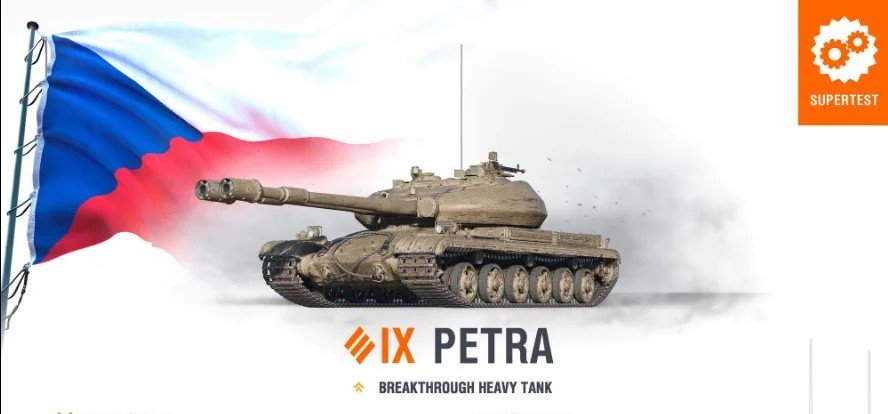
If you are familiar with the Soviet double-barrel heavies, you know that managing the long lock times and heavy reload punishments can be tricky. The Petra flips that script completely, trading sheer defensive muscle and raw speed for what might be the most responsive, forgiving double-gun system we have ever seen in the game. Let’s dive into the data sheet to see exactly how this machine stacks up.
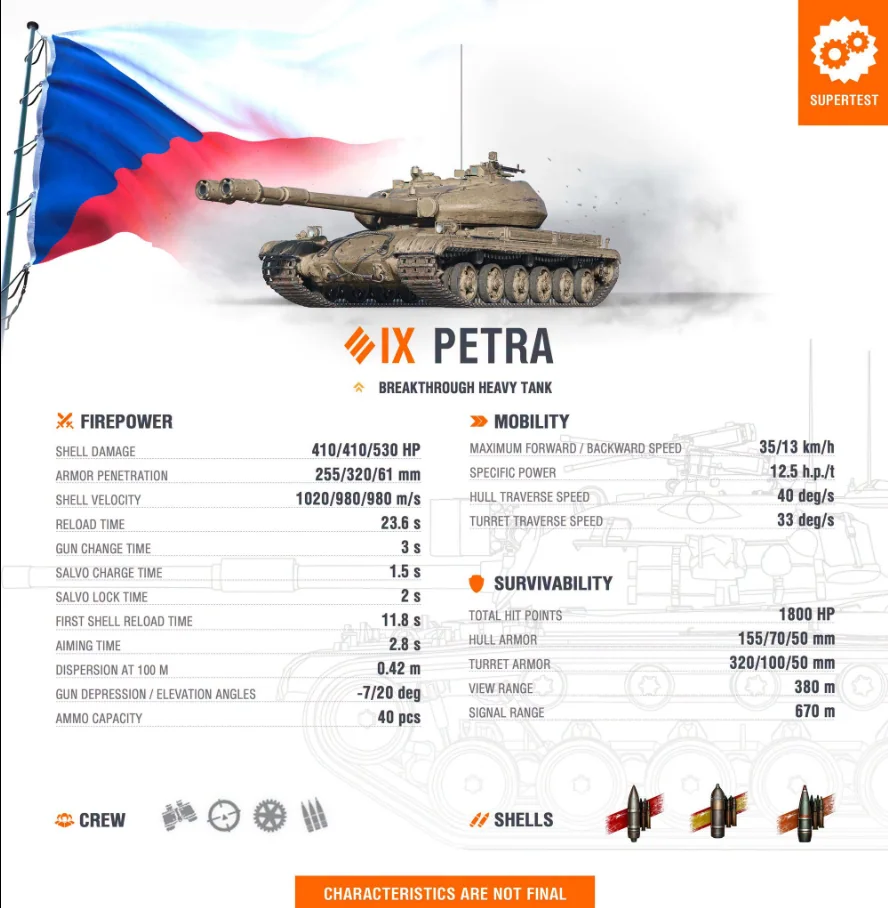
The Double-Barrel Firepower System
The centerpiece of the Petra is undoubtedly its twin-gun setup. Carrying a base shell damage of 410 HP per shot (with 255 mm of standard armor penetration and a hefty 320 mm on its premium rounds), it commands respect.
What makes it unique is how incredibly snappy the mechanics feel compared to its peers. The delay between individual shots from the two barrels is remarkably brief, allowing you to quickly pump 820 damage into an exposed target using standard cycling.
Lethal Burst with Minimal Penalties
The real magic happens when you charge up a double-shot salvo. On typical double-barrel vehicles, charging a salvo feels like waiting an eternity, leaving you completely exposed. The Petra breaks that mold with an exceptionally short 1.5-second salvo preparation time. You can spot an opening, charge the guns, and fire before the enemy even realizes they need to pull back into cover.
Even better? The reload penalty after letting loose a dual salvo is a mere 2 seconds. On other tanks, firing a double shot feels like a massive gamble because it completely halts your reload cycle. On the Petra, that penalty is almost negligible, giving you unparalleled flexibility to swap between single shots and full salvos on the fly without tanking your damage-per-minute (DPM).
Sluggish Mobility
While the guns are a dream, Wargaming had to rein this tank in somewhere, and that somewhere is the engine deck. The Petra is not going to win any drag races.
- Maximum Forward Speed: 35 km/h
- Maximum Reverse Speed: 13 km/h
- Specific Power: 12.5 horsepower per ton
With a specific power that low, it will take some time to reach that 35 km/h top speed, especially when climbing inclines. You will need to think carefully about your initial deployment because rotating to the opposite flank mid-game simply isn’t an option. Fortunately, its hull traverse speed is a comfortable 40 degrees per second, meaning light tanks will have a hard time running circles around you.
Armor and Vulnerable Weak Spots
On paper, a breakthrough heavy needs to hold the line, but the Petra’s survivability is a bit of a mixed bag. It features a solid 1,800 Hit Points and an imposing turret face boasting 320 mm of front armor. Combined with -7 degrees of gun depression, it can work ridgelines and hull-down positions quite effectively.
However, the hull armor drops down to 155 mm at the front and a very thin 70 mm on the sides. Furthermore, the Supertest notes explicitly point out that the armor layout features a considerable number of distinct weak spots. If you try to stand out in the open or over-angle your sides while side-scraping, lower-tier vehicles will have no trouble finding gaps in your defense.
Tactical Considerations
Because the hull armor is unreliable and the mobility is low, you cannot play the Petra like an unstoppable juggernaut. Instead, look at it as an opportunistic support brawler.
You want to leverage your teammate’s positioning to draw enemy fire. The moment an opponent fires and enters their reload cycle, you step out. Thanks to that blistering 1.5-second salvo charge time, you can drop an 820-damage hammer on them and retreat before they can react.
Playstyle Implications
This tank will reward players who possess excellent situational awareness. Because the salvo penalty is so forgiving (only 2 seconds), you don’t need to save your double-shots strictly for execution kills. You can confidently use salvos early in an engagement to gain a psychological and health-pool advantage over your lane opponent. Just keep that hull tucked away behind hard cover whenever possible.
Community Reception
Initial chatter among seasoned players highlights a growing curiosity about the “world of double-barrel tanks” Wargaming seems to be building. While some players are wary of fiktiv (fictional) designs stepping over historical blueprints, others are incredibly excited about a double-barrel heavy that doesn’t feel agonizingly slow to prepare its shots. The consensus so far is that the Petra looks balanced: it has an incredibly high offensive ceiling paired with distinct, exploitable weaknesses in speed and protection.
What Sets the Petra Apart
- Ultra-Fast Salvos: A 1.5-second preparation time means you can fire double-shots dynamically rather than relying strictly on stationary targets.
- Forgiving Mechanics: The 2-second post-salvo reload penalty means mistakes or missed double-shots won’t leave you defenseless for long.
- Formidable Turret: 320 mm of frontal turret armor lets you lock down lanes when your hull is safely hidden.
- Clear Drawbacks: Obvious armor weak spots and a strict 35 km/h speed limit ensure it remains a balanced addition rather than an overpowered monster.
What’s Next
As with all vehicles entering the Supertest framework, these performance characteristics are far from final. Wargaming will be monitoring how the Petra performs in live testing environments. If that double-gun system proves too oppressive in close-quarters brawls, expect to see the salvo charge time or gun dispersion (currently at a mediocre 0.42 m) adjusted before the tank officially hits production servers.
Final Thoughts
The Petra is a fascinating take on the twin-barrel archetype. By removing the frustratingly long delays and harsh reload penalties traditionally tied to the mechanic, Wargaming has created a machine that feels active, flexible, and rewarding to play. If you can manage its sluggish top speed and protect its vulnerable hull, this Czech heavy promises to be an absolute blast to pilot.