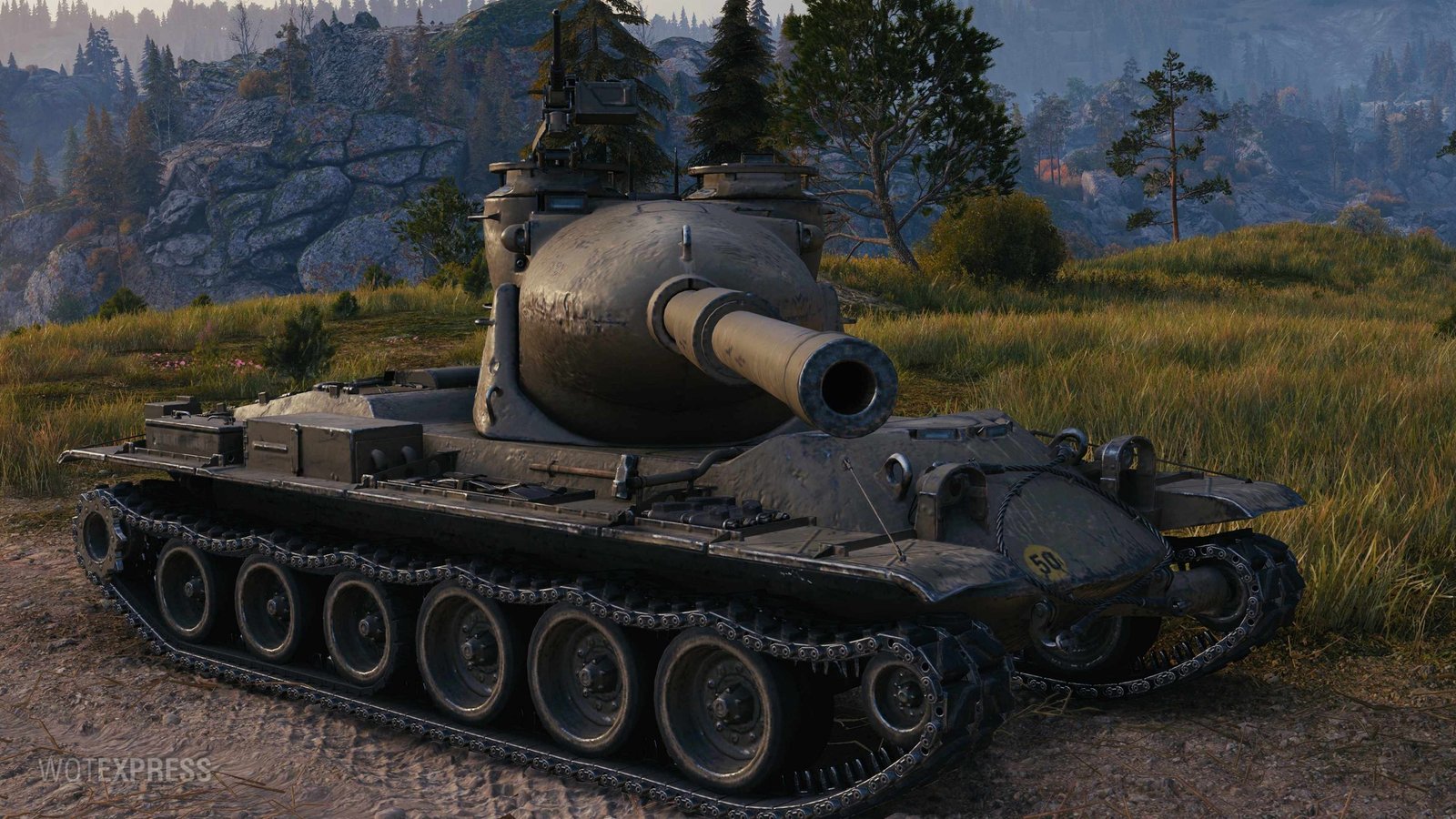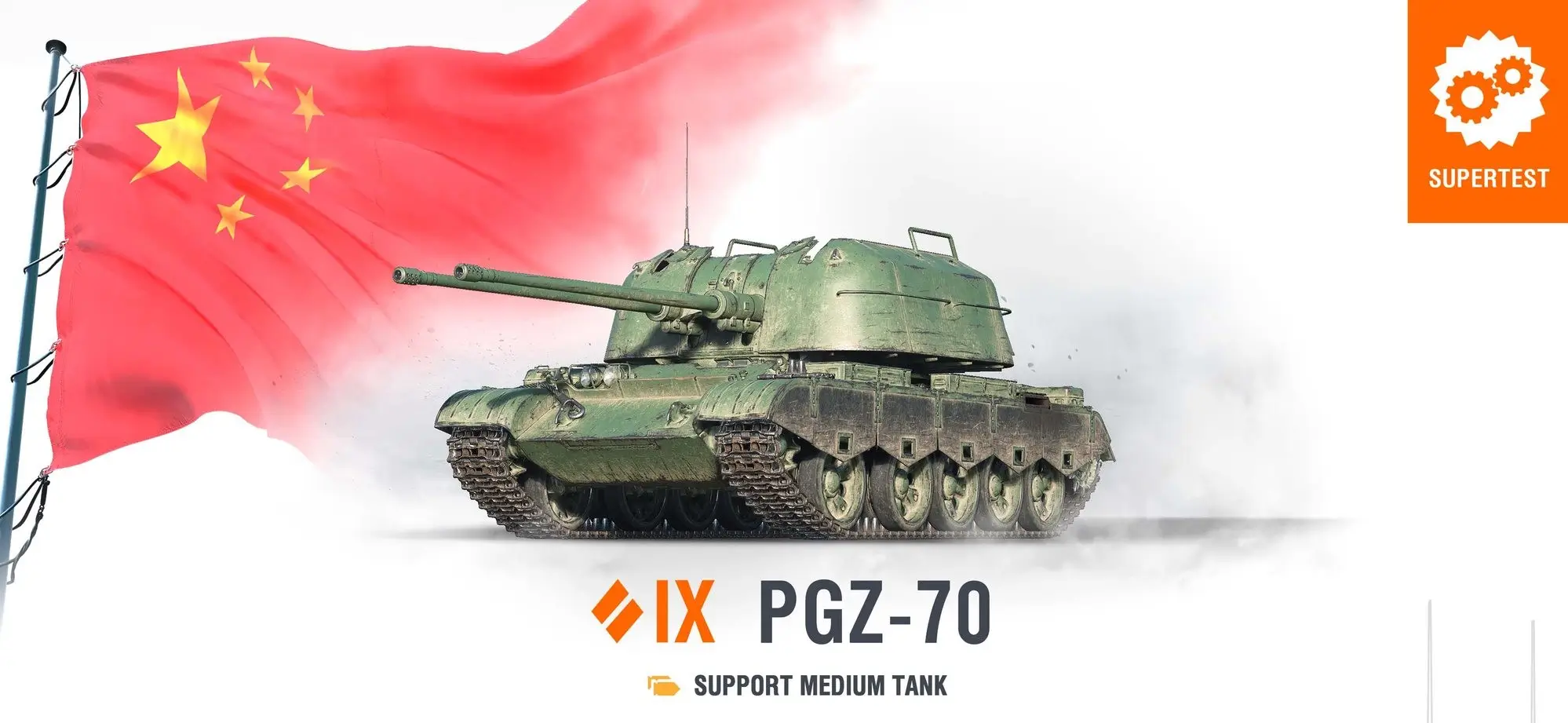
The World of Tanks Supertest has welcomed a highly unusual addition to the Chinese medium tank lineup: the PGZ-70, a Tier IX support medium tank whose defining feature is its extraordinary clip-based autocannon system. For players who appreciate the Chinese tech tree’s philosophy of borrowing the best ideas from Soviet design and pushing them to creative extremes, the PGZ-70 offers something genuinely unlike any other vehicle at its tier — a continuous-fire support weapon wrapped in the chassis of a medium tank.
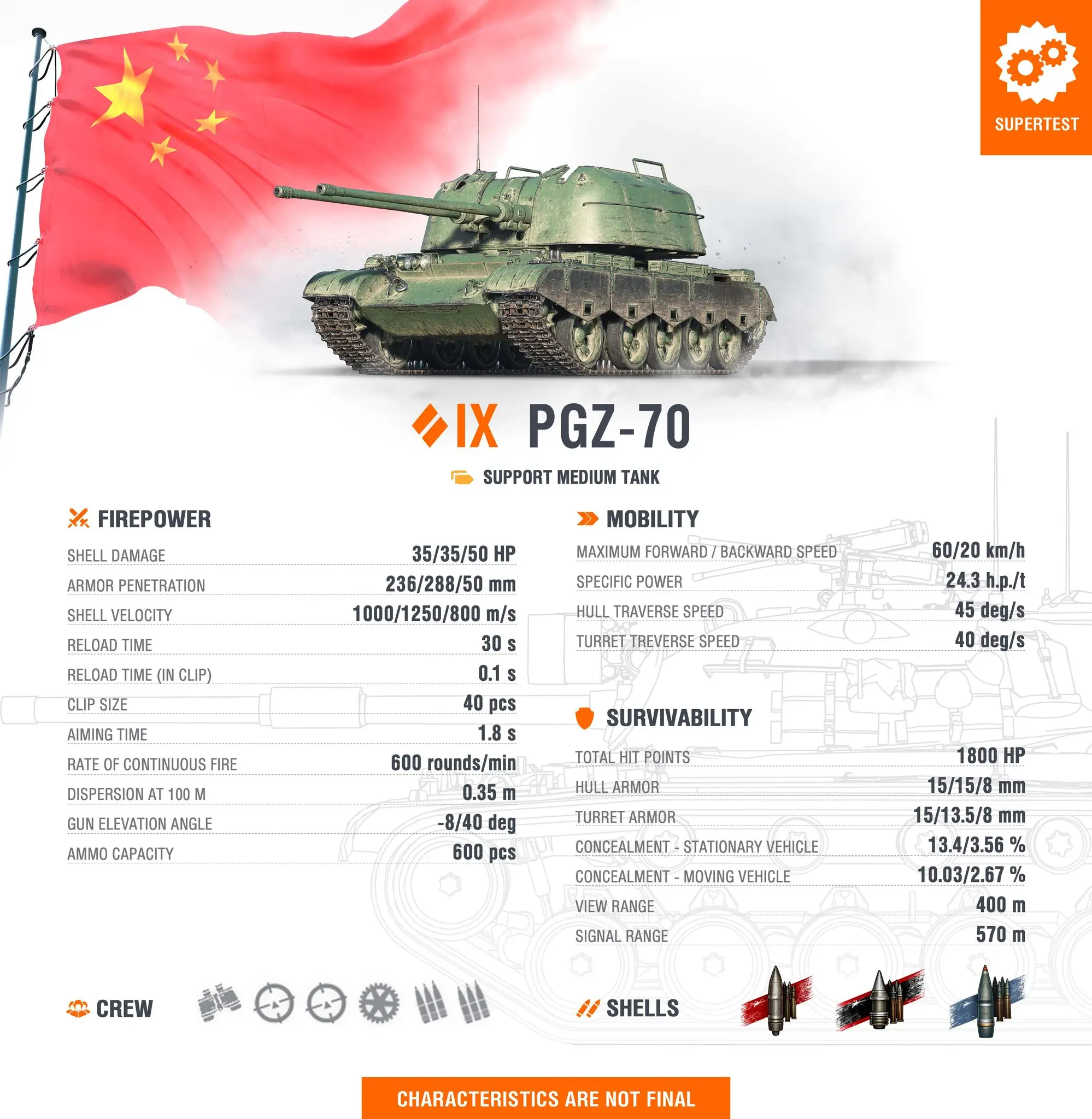
40-Round Clip: The Heart of the PGZ-70
The PGZ-70’s entire identity is built around its enormous clip:
40-Round Clip Capacity: With 40 shells loaded at once and a within-clip reload of just 0.1 seconds, the PGZ-70 can empty its entire magazine in a matter of seconds. This is not burst damage in the traditional sense — it is a sustained wall of fire that overwhelms opponents who fail to break line of sight.
600 Rounds per Minute: The rate of continuous fire is staggering. At 600 rounds per minute, the PGZ-70 functions less like a tank and more like a self-propelled anti-aircraft gun turned against armored targets — which, fittingly, is exactly what its real-world inspiration was.
35/35/50 HP Per Shell: Individual shells deal modest damage, but accumulated fire adds up rapidly. A full uninterrupted clip can theoretically deliver up to 1,400 HP worth of damage to a single target — more than enough to destroy many opponents outright.
30-Second Reload Between Clips: The trade-off for this firepower is a 30-second reload once the clip is exhausted. Timing clip usage correctly and avoiding wasteful shots against angled armor or non-penetrable surfaces becomes a critical skill.
600 Rounds Ammo Capacity: With a generous 600-round ammo pool, commanders have more than enough ammunition to sustain aggressive play throughout an entire battle without anxiety about running dry.
Penetration and Shell Velocity: Surprisingly Capable
Despite its support designation, the PGZ-70’s penetration values are meaningful:
236/288/50 mm Armor Penetration: The standard shell’s 236 mm of penetration is more than respectable for a Tier IX medium tank and will reliably punch through the sides and rear of most opponents. The 288 mm premium penetration opens up viable engagements even against heavily armored targets when the situation demands it.
1000/1250/800 m/s Shell Velocities: High shell velocity, particularly on the premium round at 1,250 m/s, makes hitting moving targets at medium range far easier than the gun’s support-class framing might suggest. The PGZ-70 is not helpless against mobile opponents.
Armor Penetration Philosophy: The PGZ-70 is not designed to duel heavy tanks from the front. Its penetration values are tailored for opportunistic flanking strikes, tracking immobilized opponents, and stripping exposed side armor — all consistent with the support medium role.
Mobility: Fast Enough to Reposition
The PGZ-70 offers adequate mobility for a support platform:
60/20 km/h Maximum Forward/Backward Speed: The 60 km/h top speed ensures the PGZ-70 can keep pace with faster mediums and respond to developing flanks in a timely manner. The 20 km/h reverse speed is functional without being exceptional.
24.3 hp/t Specific Power: The power-to-weight ratio is solid for Tier IX, providing brisk acceleration out of cover and smooth cross-country movement. The PGZ-70 will not feel sluggish when repositioning between firing positions.
45 deg/s Hull Traverse Speed: Combined with the solid specific power, the 45 deg/s hull traverse allows the PGZ-70 to pivot quickly, an essential trait for a vehicle that needs to break contact after expending its clip and begin the 30-second reload safely.
40 deg/s Turret Traverse Speed: The turret traverse is adequate for tracking targets at close to medium ranges. The PGZ-70 is not optimized for reactive close-quarters brawling, but it won’t feel helpless when targets move.
Survivability: Fragile but Evasive
The PGZ-70’s survivability profile is defined more by evasion than endurance:
1,800 HP: At 1,800 hit points the PGZ-70 sits in a reasonable range for Tier IX mediums. It has enough buffer to absorb the occasional hit during repositioning, but should never be treated as a tank that can trade freely.
15/15/8 mm Hull Armor / 15/13.5/8 mm Turret Armor: The armor values are paper-thin and will not reliably bounce anything at Tier IX, including autocannon fire from lower tiers. The PGZ-70 survives through avoidance and concealment, not protection.
Concealment — Stationary: 13.4/3.56% / Moving: 10.03/2.67%: The concealment values are modest but workable for a medium tank of this tier. Choosing well-concealed firing positions and letting the clip do its work before breaking contact is the intended loop.
400 m View Range: The view range is competitive enough to support an active support role. Combined with a 570 m signal range, the PGZ-70 contributes meaningfully to team spotting networks while operating from second-line positions.
Methodical Frontline Pressure
The PGZ-70’s design philosophy centers on disciplined clip management and positional patience:
Opportunistic Engagement: The PGZ-70 is not designed to initiate duels. Instead, it excels when enemies are already committed — dealing with teammates, crossing open ground, or sitting broadside after a push — and the PGZ-70 can pour sustained fire into their flanks.
Support-First Mentality: The “Support Medium Tank” designation is not cosmetic. The PGZ-70 performs best when operating within a team context, finishing off damaged enemies, suppressing opponents pinning down allies, and punishing overextension.
Clip Commitment Discipline: The biggest mistake a PGZ-70 player can make is committing a clip against a target that disappears behind cover after 5 rounds. Identifying targets who will remain exposed for the clip duration is the single highest-skill expression of this vehicle.
Reload Vulnerability Management: The 30-second reload window is the PGZ-70’s most dangerous moment. After expending a clip, retreating fully behind hard cover and waiting safely for the reload to complete is non-negotiable.
Tactical Considerations
The PGZ-70’s unique characteristics create specific tactical opportunities:
Flanking Windows: Use the 60 km/h speed to reach advantageous flanking positions early in the match. A broadside shot on a distracted heavy with a full 40-round clip represents an extraordinary amount of damage potential.
Tracking and Finishing: The PGZ-70 excels at finishing off tracked or damaged opponents. If a teammate immobilizes an enemy, the PGZ-70 can pour an entire clip into their side and claim the kill before they can repair.
Anti-Scout Application: The 600 rounds-per-minute fire rate, combined with the 1,000 m/s standard shell velocity, makes the PGZ-70 reasonably effective at shredding lightly armored scouts and fast mediums who attempt to rush through your position.
Gun Depression: The -8 degree gun depression is workable for hull-down firing positions, giving the PGZ-70 access to ridge lines that complement the support medium role. Use terrain to expose only the gun while delivering clip damage.
Playstyle Implications
The PGZ-70 rewards commanders who embrace patience and capitalize on opponent mistakes:
Patience Over Aggression: The PGZ-70 does not create opportunities on its own — it exploits them. Waiting for the right moment to unleash a full clip is far more valuable than repeatedly firing partial clips and retreating to reload.
Target Prioritization: Always prioritize unarmored or side-facing targets. Wasting a clip against sloped heavy tank frontal armor is the fastest way to have an ineffective battle.
Team Integration: Communicate with teammates. A coordinated push where teammates draw fire opens premium flanking opportunities for the PGZ-70 to deliver game-changing clip damage.
Second Line by Default: Unless the battlefield situation clearly calls for it, position the PGZ-70 in the second line where it can observe and select the best target before committing. The first line is for tanks that can take hits — the PGZ-70 is not one of them.
Commanders looking to master the PGZ-70 should consider:
- Learning which targets will remain stationary long enough to absorb a full clip
- Never beginning a clip engagement without a clear escape route to cover
- Using the 400 m view range actively to spot opponents before they spot you
- Counting remaining rounds to know exactly when the next 30-second reload will begin
- Working in proximity to teammates who can draw fire and create clip opportunities
- Avoiding frontal engagements with anything carrying meaningful armor
- Treating the reload window with the same caution as a fully exposed position
Community Reception
Initial community reactions to the PGZ-70 reveal a broad range of perspectives:
“Finally Something Different for China”: Many Chinese tech tree enthusiasts have reacted with cautious excitement, noting that the PGZ-70’s autocannon system gives the nation a genuinely unique Tier IX option compared to the Soviet-influenced heavies that dominate the tree.
Rate of Fire Balance Concerns: A segment of the community immediately raised concerns about whether 600 rounds per minute with 40-round clips could prove oppressive against lightly armored vehicles, particularly at Tier VII when bottom-tiered.
Support Role Skepticism: Some players expressed doubt about whether “support medium” tanks deliver enough carry potential for solo queue play, questioning if the PGZ-70 can perform without the team coordination it theoretically demands.
Historical Curiosity: The PGZ-70’s real-world origins as an anti-aircraft system have drawn significant interest from history-focused players, who appreciate the creative decision to adapt a SPAA platform into a World of Tanks support medium context.
What Sets the PGZ-70 Apart
The PGZ-70 occupies a unique niche in the Tier IX medium landscape:
Autocannon on a Medium Tank: No other Tier IX medium tank delivers fire at 600 rounds per minute. This fundamentally changes the engagement rhythm and forces both the PGZ-70 pilot and their opponents to adapt.
Clip Size Without Parallel: A 40-round clip at this tier is extraordinary. The sheer volume of fire possible in a single clip engagement creates damage outcomes unavailable to any conventional medium tank.
Anti-Aircraft Heritage: The PGZ-70’s real-world identity as an anti-aircraft system gives it an authentic design logic — a high-rate-of-fire weapon adapted for ground targets — that distinguishes it conceptually from other support medium tanks.
True Support Dependency: Unlike many tanks that describe themselves as “support” vehicles but still function effectively alone, the PGZ-70 genuinely flourishes when supported by teammates, creating a more cooperative gameplay dynamic than most Tier IX vehicles.
Evasion Over Armor: In a tier dominated by vehicles with meaningful armor schemes, the PGZ-70’s entirely evasion-based survivability philosophy is a refreshing outlier that rewards positional discipline over raw durability.
What’s Next?
As a Supertest vehicle, the PGZ-70’s characteristics remain subject to adjustment. Key questions for testing include:
- Is a 40-round clip with 0.1 s intra-clip reload appropriately balanced, or does it create frustrating suppression loops?
- Does 600 rounds per minute at 35 HP per shell create unacceptable damage-per-minute against lower-tier vehicles?
- Is the 30-second reload long enough to compensate for the extraordinary clip potential?
- Can the 1,800 HP pool sustain the PGZ-70 long enough to use its clip consistently in real battles?
- Will this be a tech tree vehicle, premium, or reward tank?
- How will the PGZ-70 interact with the existing Chinese medium tree structure?
Final Thoughts
The PGZ-70 represents one of the most creatively distinctive entries into the World of Tanks Supertest in recent memory. By adapting a real-world Chinese self-propelled anti-aircraft gun into a Tier IX support medium, Wargaming has produced a vehicle with a coherent identity and genuinely novel gameplay loop: identify the right moment, commit a devastating 40-round clip, and retreat safely to reload before repeating the process.
For commanders who enjoy strategic patience, team-oriented play, and the satisfaction of delivering enormous clip damage to a perfectly chosen target, the PGZ-70 has exceptional potential. The combination of 600 rounds per minute, a 40-round magazine, and adequate mobility creates a tank that punishes poor positioning by opponents more harshly than almost anything else at Tier IX.
However, the PGZ-70 will not suit every playstyle. Players who prefer direct dueling, aggressive solo carries, or heavily armored brawling will find the PGZ-70’s fragility and support-first philosophy frustrating. The paper-thin armor guarantees that misplays are punished severely, and the 30-second reload gap creates windows of total vulnerability that disciplined opponents will exploit.
Whether you’re excited by China finally receiving a truly unconventional Tier IX medium or skeptical about whether a 600 rounds-per-minute support platform can deliver reliable results, the PGZ-70 is unquestionably one of the most interesting vehicles to emerge from the Supertest in 2026. If Wargaming can land the balance correctly — and the “Characteristics Are Not Final” disclaimer leaves plenty of room for adjustment — the PGZ-70 could become a cult favorite for players who appreciate fire control, timing, and teamwork over raw armor and brute-force alpha strikes.